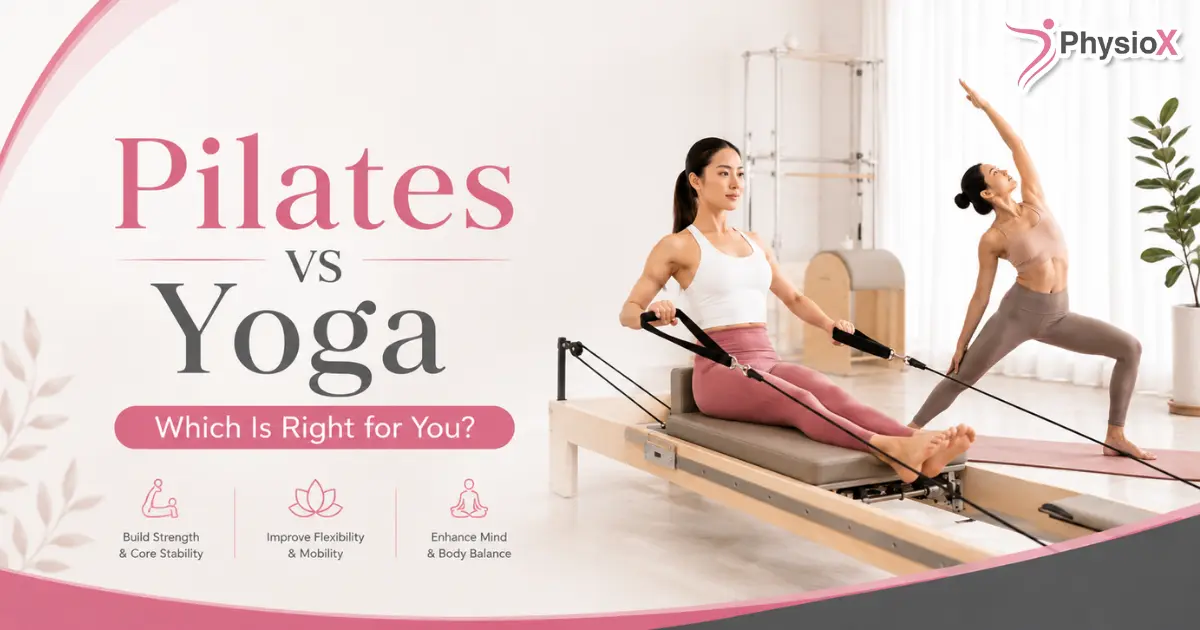
Pilates vs yoga is a comparison between two popular low-impact exercise methods that improve movement, strength, and overall wellbeing, but each has a different focus. Pilates primarily develops core strength, posture, stability, and movement control, while yoga places greater emphasis on flexibility, balance, breathing, and mindfulness. Understanding these differences makes it easier to choose the approach that best matches your goals, fitness level, and any existing pain or injuries.
When comparing Pilates vs yoga, many people wonder which one is better for improving strength, posture, flexibility, or overall wellbeing. In this guide, we'll explore the difference between Pilates and yoga, compare the benefits of each, and help you decide whether Pilates or yoga is the best fit for your lifestyle. We'll also explain why physiotherapist-led Pilates can be a safe and effective place to start.
The Core Difference Between Pilates and Yoga
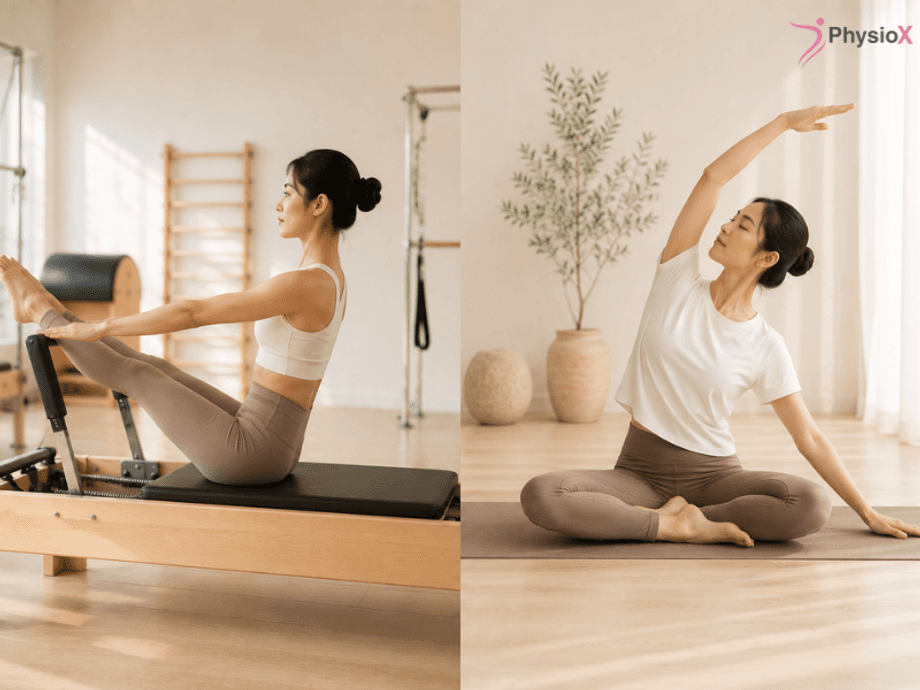
When comparing pilates vs yoga, many people ask the same question: Which one should I start with? While both practices improve movement, strength, and overall wellbeing, they are designed with different purposes in mind. Understanding these differences can help you choose the option that best matches your goals rather than following the latest fitness trend.
The difference between Pilates and yoga is not about which practice is better. Instead, it comes down to what you want to achieve, how your body moves, and whether you have any pain, injuries, or movement limitations that need to be considered.
Pilates Builds Better Movement, Yoga Encourages Mind-Body Balance
Pilates was developed to improve movement quality through controlled, precise exercise. Every movement focuses on activating the deep muscles that support the spine, pelvis, and core, helping the body move more efficiently during everyday activities. Rather than simply strengthening muscles, Pilates aims to improve stability, posture, balance, and coordination.
Yoga has a different emphasis. Although many yoga styles also improve strength, its primary focus is often on flexibility, mobility, breathing, and mindfulness. Yoga encourages participants to connect movement with breath while developing greater body awareness and relaxation.
Both approaches offer valuable health benefits, but they achieve those benefits in different ways. Pilates is generally more movement-focused, while yoga takes a broader mind-body approach.
A Side-by-Side Comparison
If you're deciding between pilates or yoga, the comparison below highlights the key differences.
Pilates | Yoga |
|---|---|
Focuses on core strength and stability | Focuses on flexibility and mobility |
Improves posture and body alignment | Improves balance and body awareness |
Uses controlled, progressive exercises | Uses flowing or static poses |
Often includes Reformer and other equipment | Usually performed on a yoga mat |
Commonly used in rehabilitation | Often practised for relaxation and mindfulness |
Neither column is "better." The right choice depends on what you hope to improve.
Which One Is Better for Beginners?
Many people assume yoga is the easiest place to begin simply because it has been around for thousands of years and is widely available. However, beginners are often surprised to learn that Pilates can be easier to adapt to individual needs.
In Pilates, exercises can be modified according to your strength, mobility, and confidence level. Movements start with simple foundations before progressing gradually, allowing you to build control and technique without feeling overwhelmed.
This is particularly helpful if you spend long hours sitting at a desk, have noticed changes in your posture, or are returning to exercise after a period of inactivity. Rather than trying to perform advanced movements immediately, you develop the fundamental movement patterns that support long-term strength and function.
When these exercises are supervised by a licensed physiotherapist, they can also be adapted for previous injuries, joint pain, or other physical limitations, providing an additional level of confidence for first-time participants.
Which Practice Is Right for You?
The answer depends on your goals.
If your priority is improving flexibility, reducing stress, or developing mindfulness, yoga may be the better fit.
If you want to improve posture, strengthen your core, move with greater confidence, or begin exercising after an injury, Pilates is often a more structured starting point. Because exercises can be individually adjusted and progressed over time, Pilates provides a practical foundation for improving movement quality safely and effectively.
If you're still unsure, there's no rule that says you must choose only one. Many people enjoy combining Pilates and yoga as their fitness journey evolves. However, for beginners looking to build strength, improve alignment, and establish healthy movement habits, starting with Pilates often creates a solid foundation before adding other forms of exercise.
If you're considering your first class, our Beginner Pilates Guide explains what to expect, while our Reformer Pilates page introduces the equipment and how it supports personalised progression. At PhysioX, every Pilates session is supervised by a licensed physiotherapist, ensuring your programme is tailored to your individual needs from day one.
Which Goals Each One Suits Best
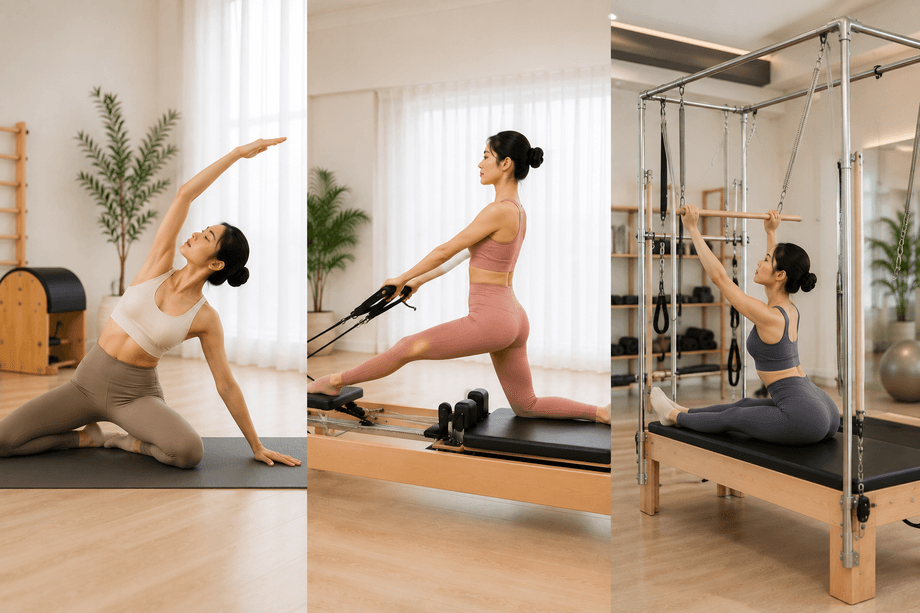
When deciding between pilates vs yoga, there is no universal answer because the right choice depends on your individual goals, fitness level, and current physical condition. Both forms of exercise offer a wide range of health benefits, but they achieve those benefits in different ways. Understanding what you want to improve—whether it is strength, flexibility, posture, stress management, or injury recovery—can help you determine whether pilates or yoga is the better fit.
Choose Pilates if Your Goal Is to Build Strength and Improve Movement
Pilates is designed to improve the body's movement quality by strengthening the deep muscles that support the spine, pelvis, and joints. Rather than focusing on large muscle groups alone, Pilates trains the body to move efficiently through controlled, coordinated movement.
For many people, Pilates is an excellent choice if your goals include:
Improving core strength and stability
Enhancing posture and spinal alignment
Increasing muscular endurance
Preventing or recovering from common musculoskeletal injuries
Improving balance and coordination
Supporting athletic performance
One of the key advantages of Pilates is that exercises can be individually progressed according to your strength and ability. Beginners may start with simple movements that develop body awareness and core activation, while more advanced participants can gradually increase the challenge using specialised equipment such as the Reformer.
Because Pilates emphasises movement precision rather than speed, it is also suitable for people returning to exercise after a period of inactivity or recovering from injury. When supervised by a licensed physiotherapist, programmes can be adapted to accommodate specific medical conditions, pain, or movement limitations while maintaining safe progression.
Choose Yoga if Your Goal Is Flexibility and Relaxation
Yoga offers benefits that extend beyond physical fitness. While many yoga styles improve muscular strength and balance, the practice is equally valued for its ability to reduce stress, encourage mindfulness, and promote relaxation.
Yoga may be the better option if your goals include:
Improving flexibility and joint mobility
Reducing stress and anxiety
Practising mindfulness and meditation
Developing breathing awareness
Enhancing overall wellbeing
Creating a sustainable self-care routine
Different styles of yoga provide different experiences. Gentle classes often focus on stretching and relaxation, while more dynamic styles can provide a physically challenging workout. Regardless of the style, breathing remains a central component, helping participants become more aware of their bodies while encouraging calm and focus throughout each session.
For people with demanding lifestyles, yoga can provide valuable time to slow down, improve mental clarity, and manage everyday stress alongside its physical benefits.
Which Is Better for Fitness?
Many people ask whether pilates or yoga provides a better workout. The answer depends on how you define fitness.
Pilates generally places greater emphasis on muscular strength, stability, body control, and functional movement. It challenges the muscles through slow, controlled exercises that require precision and endurance rather than high-impact effort.
Yoga, meanwhile, often focuses on flexibility, balance, mobility, and mind-body connection. Some vigorous styles also develop strength and cardiovascular fitness, while restorative classes prioritise recovery and relaxation.
Rather than viewing the two methods as competitors, it can be more helpful to see them as complementary approaches that develop different aspects of physical fitness.
Can You Benefit from Both?
Absolutely. Many physiotherapists, athletes, and fitness professionals recommend combining Pilates and yoga because their strengths complement one another.
Pilates can improve core stability, posture, and movement mechanics, creating a stronger foundation for everyday activities and exercise. Yoga can then build on that foundation by increasing flexibility, improving mobility, and encouraging recovery through mindful breathing and stretching.
For example, someone who spends long hours sitting at a desk may benefit from Pilates to strengthen postural muscles while using yoga sessions to relieve muscle tension and improve flexibility. Likewise, recreational runners or gym-goers often combine both practices to support performance while reducing the risk of overuse injuries.
Ultimately, choosing between pilates vs yoga should not be about deciding which practice is superior. Instead, it is about identifying which one best supports your current needs. If your priority is developing core strength, improving posture, or addressing movement-related concerns under professional supervision, Pilates may be the ideal starting point. If your primary focus is flexibility, relaxation, and mindfulness, yoga may better match your goals. For many people, incorporating both into a regular routine provides the most balanced approach to long-term health and wellbeing.
Pilates vs Yoga for Back Pain and Posture
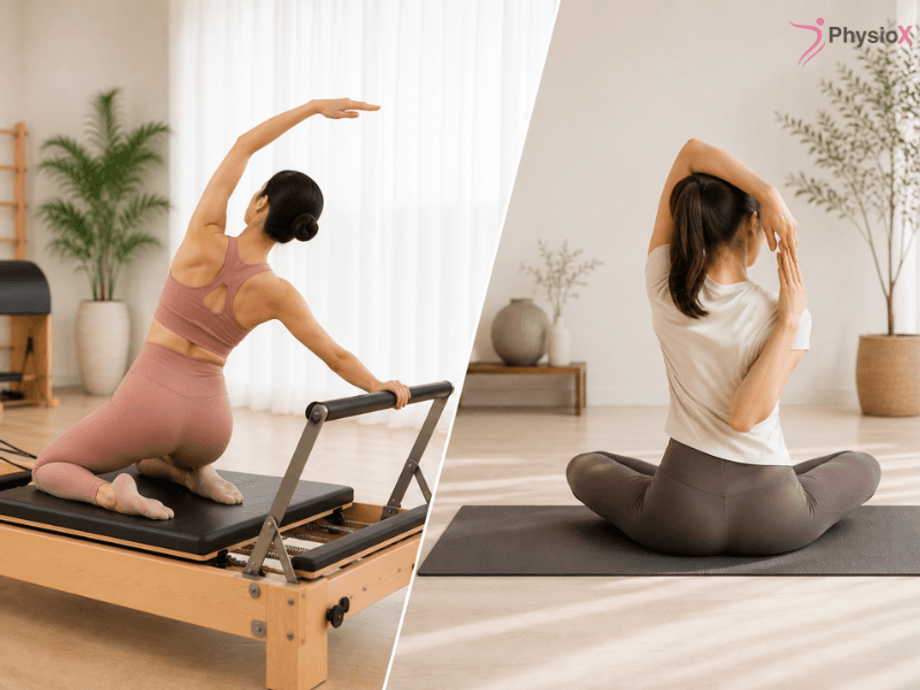
Back pain and poor posture are among the most common reasons people begin exploring low-impact exercise. Whether discomfort is caused by prolonged sitting, repetitive movements, muscle weakness, or a lack of mobility, many people ask whether pilates vs yoga is the better option for improving spinal health. The answer depends on the underlying cause of your symptoms, your movement patterns, and your individual goals.
How Pilates Supports Back Pain and Posture
Pilates is widely recognised for its focus on core stability, spinal alignment, and controlled movement. Rather than simply strengthening large muscle groups, Pilates targets the deep stabilising muscles that support the spine, pelvis, and trunk. These muscles play an essential role in maintaining good posture and helping the body move efficiently throughout daily activities.
For people with posture-related discomfort, Pilates encourages awareness of neutral spine alignment, balanced muscle activation, and proper body mechanics. Over time, this may help reduce excessive strain on the neck, shoulders, and lower back caused by prolonged sitting or inefficient movement patterns.
Exercises are performed slowly and with precision, allowing participants to develop greater control rather than relying on momentum. This emphasis on movement quality makes Pilates particularly valuable for individuals who want to improve posture while building functional strength.
When supervised by a licensed physiotherapist, Pilates exercises can also be modified to accommodate specific injuries, movement limitations, or rehabilitation goals. Individual assessment helps ensure that exercises are appropriate for your condition and progressed safely as your strength and confidence improve.
How Yoga Can Help Back Pain
Yoga offers a different approach to supporting spinal health. Many yoga styles focus on improving flexibility, mobility, and relaxation, all of which can contribute to reducing muscular tension that may be associated with back discomfort.
Tight muscles around the hips, hamstrings, chest, and shoulders can influence posture and movement. Gentle stretching and mobility exercises may help improve range of motion, allowing the body to move more comfortably during everyday activities.
In addition to physical movement, yoga incorporates breathing exercises and mindfulness techniques that may help reduce stress. Since emotional stress can contribute to muscle tension and increase the perception of pain, relaxation can become an important part of managing persistent discomfort for some individuals.
However, not every yoga pose is suitable for every person. Deep forward bends, backbends, or twisting positions may aggravate certain spinal conditions if performed incorrectly or without appropriate modifications. For individuals with existing injuries, professional guidance is recommended before beginning a new exercise programme.
Which Is Better for Back Pain?
When comparing pilates vs yoga for back pain, there is no single answer that applies to everyone. Both can be beneficial when matched to the individual's needs, but they address different aspects of movement and recovery.
If your back discomfort is related to poor posture, reduced core strength, or movement control, Pilates may provide a structured approach to improving spinal stability and functional movement. If muscle tightness, stress, or limited flexibility plays a larger role in your symptoms, yoga may offer valuable benefits through stretching, mobility, and relaxation.
It is also important to remember that persistent or severe back pain should not be self-diagnosed. Exercise is most effective when it addresses the underlying cause rather than simply treating the symptoms.
At PhysioX, every Pilates programme begins with an individual assessment by a licensed physiotherapist. This allows exercises to be tailored to your posture, movement patterns, and clinical needs, helping you build strength safely while reducing unnecessary strain on the spine. For many people, this personalised approach provides greater confidence when beginning Pilates, particularly if they have experienced pain or injury in the past.
How to Choose, and How to Try Both Safely
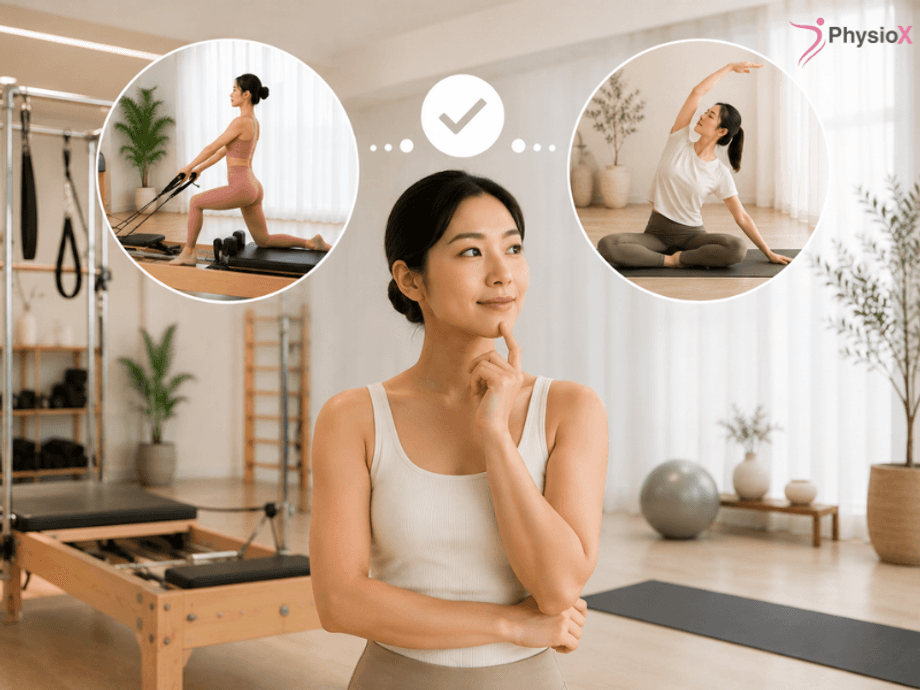
If you're still deciding between pilates vs yoga, the good news is that there isn't a wrong choice. Both practices can improve strength, mobility, balance, and overall wellbeing when performed consistently and with proper guidance. The key is to choose the approach that best matches your goals, physical condition, and level of experience.
Start with Your Personal Goals
Before joining a class, ask yourself what you hope to achieve.
If your priority is improving posture, building core strength, recovering from an injury, or enhancing movement quality, Pilates may be the better starting point. Its structured exercises focus on developing stability, alignment, and muscular control that can carry over into everyday activities and sports.
If your main objective is increasing flexibility, reducing stress, improving mindfulness, or creating a calming self-care routine, yoga may be a more suitable option. Many people find that yoga provides both physical and mental benefits, particularly when managing the demands of a busy lifestyle.
Your goals may also change over time. Someone who begins Pilates to address back pain may later add yoga to improve flexibility, while an experienced yoga practitioner may use Pilates to strengthen the core and improve movement efficiency.
Consider Your Current Physical Condition
Your fitness level and medical history should also influence your decision.
If you have chronic pain, a previous injury, joint problems, or a medical condition that affects movement, it is worth seeking professional advice before starting any new exercise programme. Certain movements may need to be modified to suit your individual needs, particularly during the early stages of recovery.
Pregnant women, older adults, and people returning to exercise after a long break may also benefit from programmes that can be adjusted to match their abilities. Choosing classes that offer personalised instruction can help you build confidence while reducing the risk of unnecessary strain.
Tips for Trying Pilates or Yoga Safely
Whether you choose pilates or yoga, following a few simple principles can make your experience safer and more enjoyable.
Begin with a beginner-friendly class that teaches proper technique.
Focus on quality of movement rather than trying to keep up with others.
Learn the correct breathing patterns, as breathing plays an important role in both practices.
Progress gradually instead of attempting advanced exercises too soon.
Listen to your body and stop if you experience sharp or worsening pain.
Wear comfortable clothing that allows you to move freely.
It is normal to feel muscles working in new ways, especially when you first begin. However, exercise should not cause severe pain, numbness, dizziness, or symptoms that continue to worsen after your session. If these occur, seek advice from a qualified healthcare professional before continuing.
The Value of Professional Guidance
One of the safest ways to begin Pilates is under the supervision of a licensed physiotherapist. Rather than following a one-size-fits-all routine, physiotherapist-led sessions start with an assessment of your posture, movement patterns, strength, and any existing pain or injuries. Exercises are then tailored to your individual needs and progressed at an appropriate pace.
This personalised approach is particularly valuable for beginners, individuals recovering from injury, or anyone who feels unsure about which exercises are appropriate. With expert guidance, you can build confidence, improve movement quality, and establish a safe foundation for long-term health—whether you continue with Pilates alone or eventually incorporate yoga into your regular routine.
Why Physiotherapist-Led Pilates Is a Good Starting Point
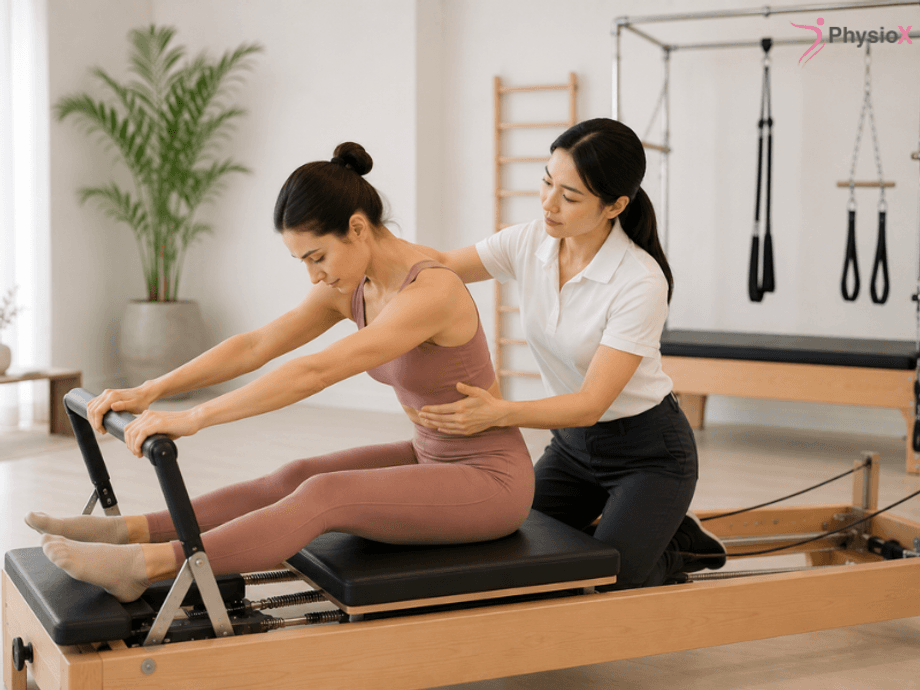
If you're new to pilates vs yoga, beginning with professional guidance can make a significant difference to both your confidence and your results. While group fitness classes can be effective, they often follow a standard programme designed for participants with varying abilities. A physiotherapist-led Pilates programme, on the other hand, is built around your individual needs, helping you move safely while working towards your personal goals.
A Personalised Assessment Before You Begin
At PhysioX, every Pilates journey starts with an assessment by a licensed physiotherapist. Rather than assuming everyone moves the same way, your physiotherapist evaluates your posture, mobility, strength, flexibility, balance, and movement patterns before recommending appropriate exercises.
This initial assessment is particularly valuable if you experience back pain, neck pain, joint discomfort, previous injuries, or simply feel unsure about where to start. By understanding how your body moves, your physiotherapist can identify areas that may benefit from improved stability, strength, or mobility and develop a programme tailored specifically to you.
Safe Progression for Every Ability
One of the greatest advantages of physiotherapist-led Pilates is that every exercise can be modified to match your current ability. Whether you are completely new to exercise, returning after an injury, or looking to improve athletic performance, the programme progresses at a pace that is appropriate for your body.
Exercises can be adjusted by changing resistance, movement range, or level of support, particularly when using equipment such as the Reformer. This gradual progression helps reduce unnecessary strain while allowing you to build confidence and develop proper movement patterns over time.
For beginners, this personalised approach often feels less intimidating than trying to follow a fast-paced group class without understanding the correct technique.
Combining Clinical Expertise with Exercise
Unlike general fitness instruction, physiotherapist-led Pilates combines evidence-informed exercise with clinical knowledge of anatomy, biomechanics, and rehabilitation. Your physiotherapist not only demonstrates each movement but also explains why it is being performed and how it supports your specific goals.
This level of supervision is especially beneficial for people recovering from injury, managing persistent pain, or addressing posture-related concerns. Rather than simply completing a workout, you learn how to move more efficiently and reduce unnecessary stress on your joints and muscles.
Building Long-Term Movement Confidence
Ultimately, the goal of physiotherapist-led Pilates is not only to help you exercise safely but also to improve the way you move in everyday life. Better posture, stronger core muscles, improved balance, and greater body awareness can all contribute to long-term physical wellbeing.
Whether you're comparing pilates vs yoga, beginning your fitness journey, or returning to exercise after an injury, starting with professional guidance provides a strong foundation for lasting results. At PhysioX, every session is supervised by a licensed physiotherapist, ensuring your programme is tailored to your needs and progresses safely as your strength and confidence grow.
Ready to take the first step? Try a physiotherapist-led Pilates session at PhysioX and discover how personalised care can help you move with greater strength, confidence, and comfort.
Conclusion
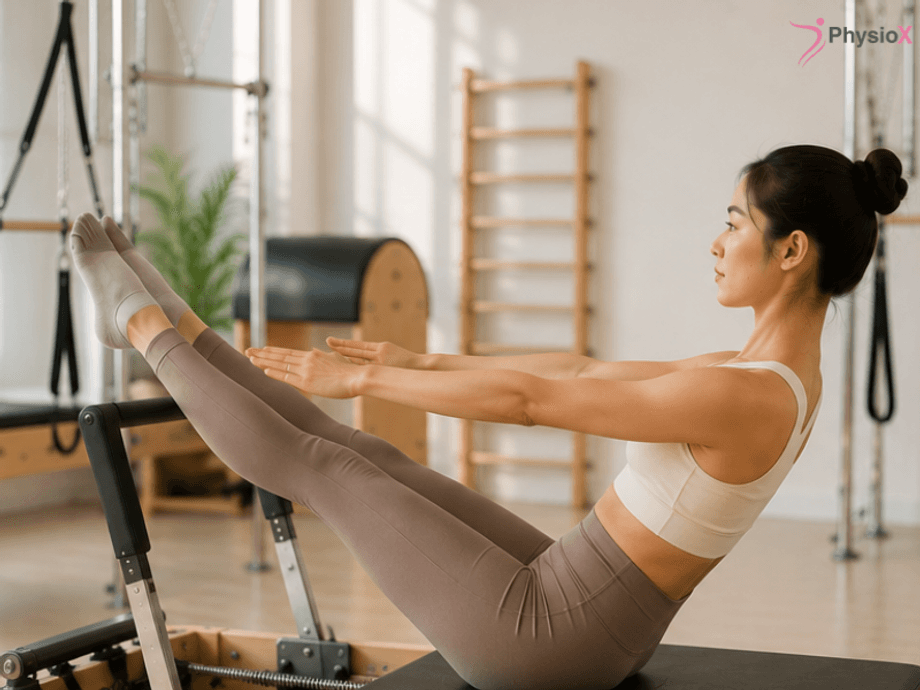
When it comes to pilates vs yoga, there is no single answer that suits everyone. Both practices offer valuable health benefits, but they focus on different aspects of physical and mental wellbeing. Pilates is often the preferred choice for improving core strength, posture, movement control, and functional stability, while yoga excels at enhancing flexibility, relaxation, balance, and mindfulness.
The best option depends on your individual goals, fitness level, and any existing injuries or health concerns. Some people choose one practice over the other, while many enjoy combining both to create a balanced approach to long-term health. If you're unsure whether pilates or yoga is right for you, seeking professional guidance can help you make an informed and confident decision.
Ready to Get Started?
At PhysioX, every Pilates session is designed and supervised by a licensed physiotherapist, ensuring your program is tailored to your body, goals, and movement needs. Whether you're looking to improve posture, recover from an injury, build strength, or simply move with greater confidence, we're here to support you every step of the way.
Try a physiotherapist-led Pilates session at PhysioX.
To book your first session, add us on LINE, Facebook Messenger, or WhatsApp, or call us at +66 98 802 4861. Our team is here to answer your questions and help you choose the Pilates programme that's right for you.
Related Blog