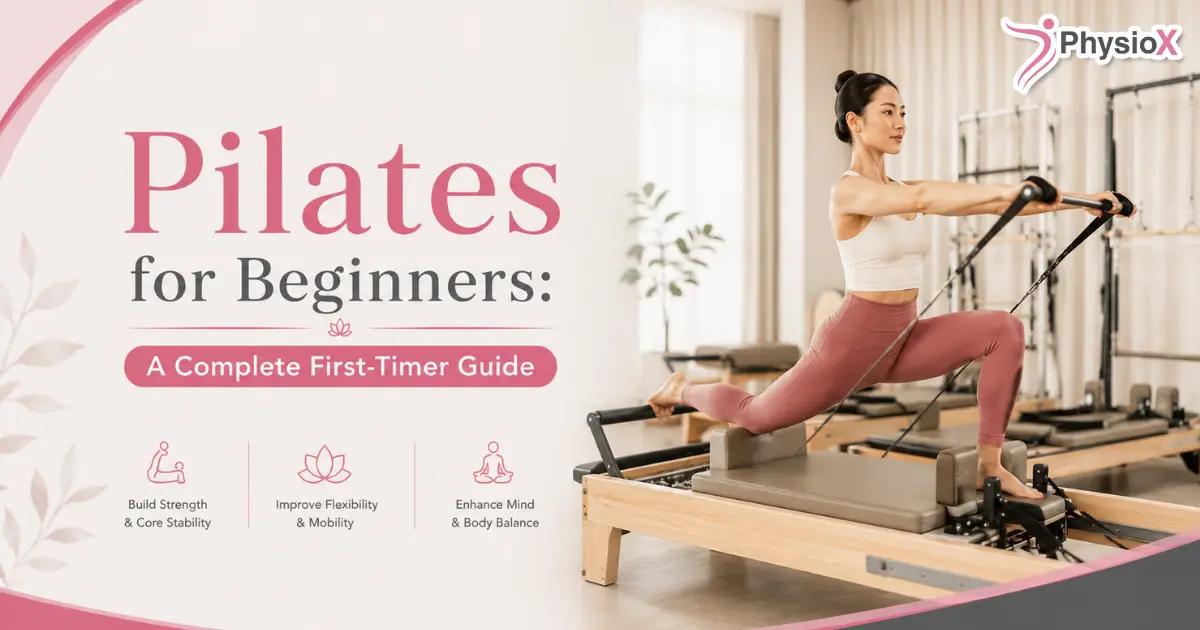
Pilates for beginners is an introductory approach to Pilates designed to help people build core strength, improve posture, increase body awareness, and move with confidence, regardless of age or fitness level. It focuses on learning fundamental movement patterns, breathing techniques, and proper alignment in a safe, progressive way, making it suitable for complete beginners as well as those returning to exercise after a break.
Starting something new can feel intimidating, but you don't need to be flexible, athletic, or have previous exercise experience to begin. In this guide, we'll cover the Pilates basics, explain what to expect in your first class, compare Mat and Reformer Pilates, and share practical tips to help you get started safely. Whether you're exploring beginner Pilates for fitness, rehabilitation, or overall wellbeing, this guide will help you take your first step with confidence.
What Pilates Is and What to Expect in Your First Class
If you're exploring pilates for beginners, it's natural to have questions before stepping into a studio. Many first-time participants wonder whether they'll be fit enough, flexible enough, or able to keep up with the class. The good news is that Pilates is designed to be adaptable, making it suitable for people of different ages, fitness levels, and movement abilities.
What Is Pilates?
Pilates is a low-impact form of exercise that focuses on improving strength, posture, balance, flexibility, and body awareness through controlled, precise movements. Developed by Joseph Pilates in the early 20th century, the method emphasises quality over quantity. Instead of performing fast or repetitive exercises, each movement is completed with careful attention to breathing, alignment, and muscle control.
One of the key principles of Pilates is strengthening the body's "core"—the muscles that support the abdomen, lower back, pelvis, and hips. A stronger core provides a stable foundation for everyday activities, from lifting groceries and climbing stairs to playing sports and maintaining good posture while working at a desk.
Although Pilates is often associated with fitness, it is also widely used to support rehabilitation and injury prevention. When guided by a licensed physiotherapist, exercises can be modified to suit individual needs, making beginner Pilates accessible even for people recovering from injuries or managing chronic pain.
What Happens During Your First Class?
Your first Pilates session is not about performing advanced exercises or achieving perfect technique. Instead, it is an opportunity to learn the Pilates basics in a supportive and structured environment.
If you're attending a physiotherapist-led session, the class will often begin with a brief assessment. Your instructor may ask about your medical history, exercise experience, previous injuries, and personal goals. They may also observe your posture, mobility, and movement patterns to better understand how your body moves.
The session usually starts with a gentle warm-up to prepare your muscles and joints for exercise. You'll then learn fundamental Pilates movements that focus on breathing, core activation, and proper alignment. Rather than rushing through exercises, you'll be encouraged to move slowly and with control, allowing you to develop confidence and awareness with each movement.
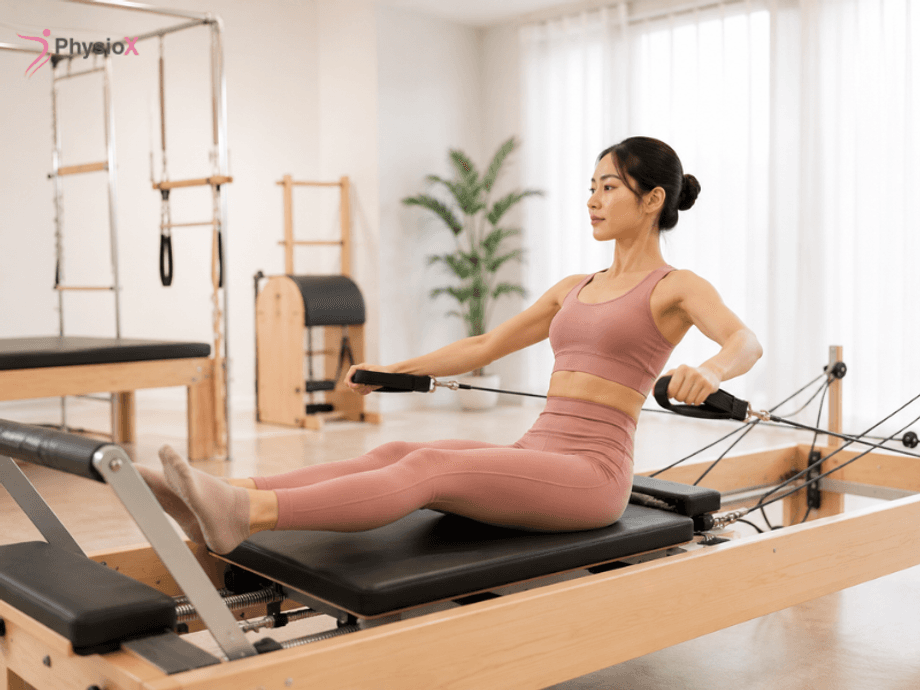
If you're using equipment such as a Reformer, your instructor will explain how the machine works and guide you through each exercise step by step. The springs provide adjustable resistance and support, making many movements easier to learn while allowing exercises to be adapted to your current strength and ability.
Do You Need to Be Fit Before Starting?
One of the biggest misconceptions about pilates for beginners is that you need to be strong or flexible before joining your first class. In reality, Pilates is designed to help you develop these qualities over time.
Exercises can be modified for complete beginners, older adults, office workers, and people returning to exercise after a long break. The goal isn't to perform the most challenging movements on your first day but to build a strong foundation through proper technique and gradual progression.
It's also completely normal to need time to learn the movements. Every participant progresses at their own pace, and consistency is far more important than perfection.
What Should You Expect to Feel Afterwards?
After your first class, you may notice muscles working in ways they haven't before, particularly around your core, hips, and back. Mild muscle soreness is common, especially if you're new to exercise, but you should also feel more aware of your posture and movement.
Most importantly, your first class should leave you feeling encouraged—not overwhelmed. Pilates is a journey of gradual improvement, and every session helps you build strength, confidence, and better movement patterns. With regular practice and guidance from a qualified instructor or licensed physiotherapist, you'll establish a strong foundation for long-term health and wellbeing.
Mat vs Reformer vs Full Apparatus for Beginners
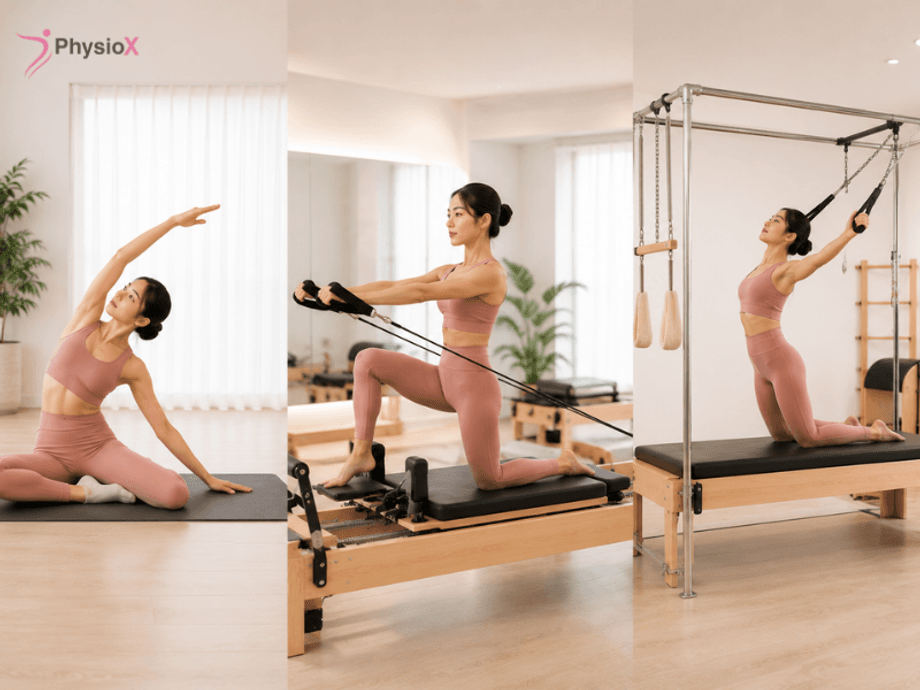
One of the most common questions about pilates for beginners is which type of Pilates is the best place to start. You may have heard of Mat Pilates, seen videos of the Reformer machine on social media, or noticed studios offering a range of specialised equipment. While each option follows the same core Pilates principles, they provide different learning experiences and suit different goals.
Understanding the differences can help you choose the right starting point for your fitness level, confidence, and movement needs.
Mat Pilates
Mat Pilates is performed on a padded exercise mat using your own body weight for resistance. Some classes may also include small props such as resistance bands, Pilates rings, or exercise balls, but the focus remains on controlling your body without the support of large equipment.
For many people, Mat Pilates is an excellent introduction to the Pilates basics. It teaches breathing techniques, core activation, posture, and body awareness while helping you develop strength and coordination.
However, because your body provides all the resistance, some exercises may actually feel more challenging than beginners expect. Without equipment to provide support, maintaining proper alignment can require greater strength and stability, particularly for those who are new to exercise or recovering from injury.
Reformer Pilates
Reformer Pilates uses a specialised machine with a sliding carriage, adjustable springs, straps, and a footbar to provide both resistance and assistance during exercise. Although the equipment may look intimidating at first, it is often one of the most beginner-friendly ways to learn Pilates.
The adjustable spring system allows exercises to be tailored to each individual's ability. Springs can provide extra support for beginners learning new movements or increased resistance as strength and confidence improve. This makes the Reformer highly adaptable for people of different ages, fitness levels, and rehabilitation needs.
Many beginners also find it easier to understand correct body alignment on the Reformer because the equipment provides continuous feedback throughout each movement. With guidance from an instructor, you can learn how to engage the correct muscles while moving safely and with greater control.
Full Apparatus Pilates
While the Reformer is the most recognised piece of Pilates equipment, it is only one part of a complete Pilates studio. Full Apparatus Pilates incorporates a range of specialised equipment designed to challenge different movement patterns and support individual progression.
Depending on your programme, you may use equipment such as the Cadillac, Chair, Barrels, Tower, CoreAlign, and other specialised apparatus. Each piece serves a unique purpose, helping to improve strength, flexibility, balance, coordination, mobility, and functional movement.
A fully equipped studio also gives instructors greater flexibility to modify exercises for beginners, older adults, athletes, or individuals recovering from injury. Instead of following a one-size-fits-all approach, sessions can be adapted using different equipment to match your current abilities and long-term goals.
Which Option Is Best for Beginners?
There isn't a single answer that suits everyone, but for many people, Reformer Pilates or a full apparatus studio offers the most supportive environment for learning.
If your goal is general fitness and you're comfortable exercising independently, Mat Pilates can be a great introduction to the method. However, if you're completely new to Pilates, have back or neck discomfort, are returning after an injury, or simply want more personalised guidance, equipment-based Pilates often provides a smoother learning experience.
At PhysioX, beginners are introduced to Pilates through programmes supervised by licensed physiotherapists using a full range of professional equipment—not just the Reformer. Every programme begins with an individual assessment, allowing exercises to be selected and progressed according to your posture, movement patterns, and fitness level.
Rather than choosing between Mat or Reformer alone, you'll receive a personalised combination of equipment that supports safe progression and helps you build confidence from your very first session. This tailored approach allows you to learn correct movement techniques, improve core strength, and establish a strong foundation for long-term health and wellbeing.
What to Wear and How to Prepare
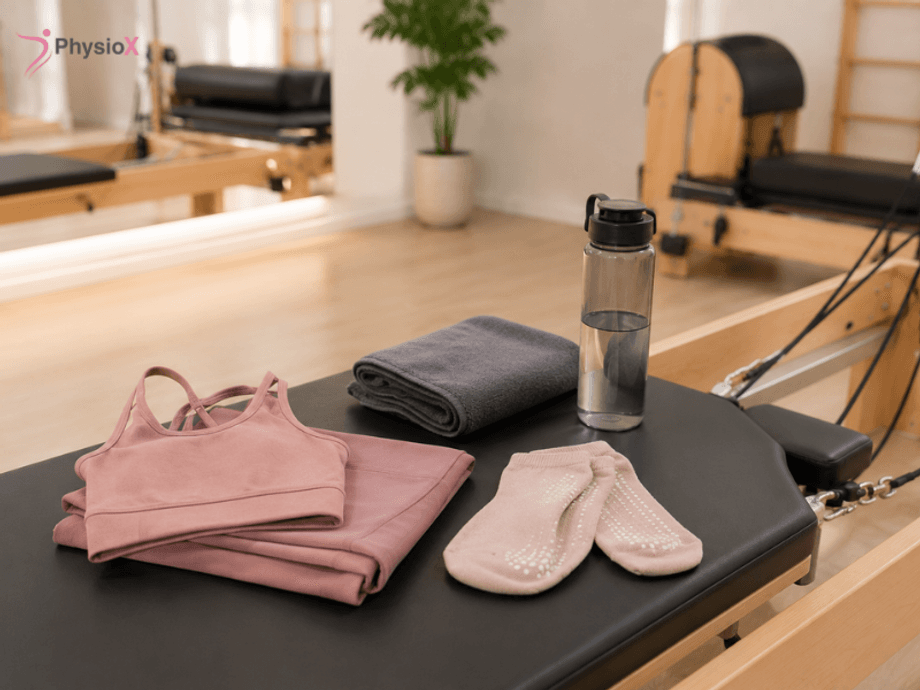
Preparing for your first Pilates class doesn't need to be complicated. One of the reasons pilates for beginners is so approachable is that you don't need expensive equipment or previous experience to get started. A little preparation can simply help you feel more comfortable and confident during your session.
What Should You Wear?
Choose comfortable clothing that allows you to move freely without restricting your range of motion. Fitted activewear, such as leggings, shorts, or a breathable T-shirt, is often recommended because it allows your instructor to observe your posture and movement more easily. Extremely loose clothing may make it difficult to check your alignment during certain exercises.
Most Pilates studios also recommend wearing grip socks, particularly for Reformer or equipment-based classes. These socks provide better traction, improve stability, and help maintain hygiene when using shared equipment.
Jewellery, belts, and bulky accessories are best left at home, as they may become uncomfortable or interfere with certain movements.
Should You Eat Before Class?
It's generally a good idea to avoid eating a large meal immediately before your Pilates session. Exercising on a very full stomach can feel uncomfortable, especially during movements that involve core activation or lying on your back.
If you need a snack beforehand, choose something light one to two hours before class and drink enough water to stay hydrated throughout the day.
What Should You Bring?
Most studios provide the equipment needed for your class, especially if you're attending Reformer or Full Apparatus Pilates. However, it's always worth checking in advance.
For your first visit, consider bringing:
Comfortable workout clothing
Grip socks (if required by the studio)
A water bottle
A small towel if preferred
If you're attending a physiotherapist-led session, it's also helpful to let your instructor know about any injuries, medical conditions, or movement concerns before the class begins. This allows exercises to be modified to suit your individual needs.
Arrive Early and Relax
Try to arrive 10–15 minutes before your first class. Arriving early gives you time to complete any necessary paperwork, meet your instructor, and become familiar with the studio and equipment without feeling rushed.
Most importantly, remember that your first class is about learning—not being perfect. Every experienced Pilates practitioner was once a beginner. By wearing comfortable clothing, arriving prepared, and keeping an open mind, you'll be ready to enjoy your first session and build a strong foundation for your Pilates journey.
Common Beginner Mistakes and How to Avoid Them
Starting Pilates is an exciting step towards improving your strength, posture, and overall wellbeing. However, like learning any new skill, it's normal to make a few mistakes along the way. The good news is that most beginner errors are easy to correct with proper guidance and regular practice. By understanding these common challenges, you can get more out of your pilates for beginners journey while reducing the risk of discomfort or injury.
1. Trying to Progress Too Quickly
Many beginners feel pressure to keep up with more experienced participants or attempt advanced exercises too soon. In reality, Pilates is built on mastering the fundamentals before progressing to more challenging movements.
Focus on learning the Pilates basics, including breathing, alignment, and core engagement. Building a strong foundation will help you move more efficiently and safely as your skills develop.
2. Forgetting to Breathe
Breathing is a key principle of Pilates, yet many beginners unintentionally hold their breath when concentrating on difficult movements.
Proper breathing helps activate the core, improves movement control, and reduces unnecessary tension throughout the body. Your instructor will guide you on when to inhale and exhale during each exercise, so don't worry if it feels unfamiliar at first—it becomes more natural with practice.
3. Focusing on Speed Instead of Control
Unlike high-intensity workouts, Pilates isn't about completing as many repetitions as possible. The quality of each movement is far more important than the number of exercises you perform.
Slow, controlled movements help improve muscle activation, coordination, and body awareness. Moving too quickly can reduce the effectiveness of an exercise and make it more difficult to maintain proper alignment.
4. Ignoring Pain or Poor Technique
It's normal to feel muscles working in new ways, but sharp pain or persistent discomfort should never be ignored. If something doesn't feel right, let your instructor know rather than pushing through the exercise.
This is especially important for people with previous injuries, back pain, or joint conditions. A qualified instructor or licensed physiotherapist can modify movements to better suit your individual needs while helping you maintain proper technique.
5. Comparing Yourself to Others
One of the biggest mistakes in beginner Pilates is assuming everyone progresses at the same pace. Every person's body, fitness level, and movement history are different, so comparing yourself with others can lead to unnecessary frustration.
Instead of focusing on what someone else can do, pay attention to your own progress. Small improvements in posture, balance, strength, and body awareness often lead to meaningful long-term results.
Progress, Not Perfection
Remember that Pilates is a practice, not a competition. The goal isn't to perform every exercise perfectly during your first few classes but to move with greater awareness and confidence over time. With consistent practice and guidance from a licensed physiotherapist, you'll gradually develop better movement habits, improve your technique, and build the strength needed to progress safely. Every expert was once a beginner, and every class is another step towards moving better and feeling stronger.
Why Starting with a Physiotherapist Is Safer
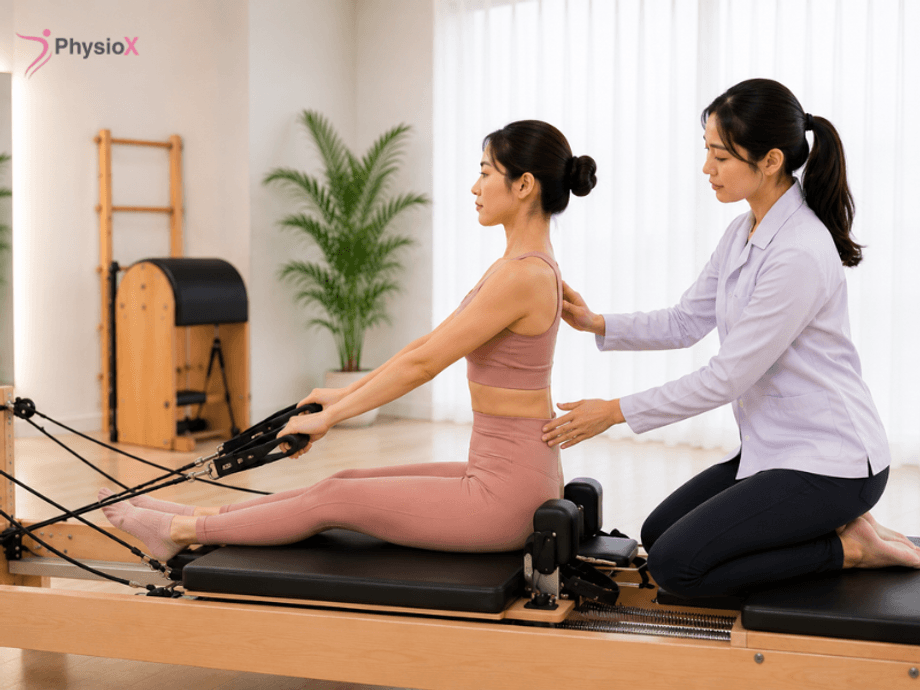
While Pilates is suitable for people of all ages and fitness levels, the way you begin can have a significant impact on your long-term progress. For many people, especially those who are new to exercise or returning after an injury, starting with a licensed physiotherapist provides added confidence and a more personalised experience. Rather than following a one-size-fits-all class, you'll receive guidance based on how your body moves and what you want to achieve.
A Personalised Assessment from Day One
One of the biggest advantages of physiotherapist-led Pilates is that your programme begins with an individual assessment. Before introducing exercises, your physiotherapist evaluates your posture, movement patterns, flexibility, strength, balance, and any previous injuries or medical conditions.
This assessment helps identify areas that may require additional support or attention, allowing your exercises to be tailored to your individual needs. Instead of following the same routine as everyone else, you'll start with movements that are appropriate for your current ability and progress at a pace that's right for you.
Safer Progression for Beginners
One of the most common concerns among people exploring pilates for beginners is whether they'll be able to keep up. The good news is that you don't need to be fit or flexible before starting.
A physiotherapist understands how to modify exercises, adjust resistance, and choose the right equipment to match your ability. As your strength, mobility, and confidence improve, your programme can be progressed gradually without unnecessary strain. This personalised progression reduces the likelihood of overloading muscles or performing movements beyond your current capability.
Expert Guidance for Better Movement
Pilates is about more than simply completing exercises—it's about learning how to move well. Small adjustments to your posture, breathing, or movement technique can make a significant difference to the effectiveness of each exercise.
With a physiotherapist guiding your sessions, you'll receive immediate feedback to help you activate the correct muscles and improve movement quality. Learning proper technique from the beginning also helps establish healthy movement habits that benefit everyday activities, work, and sport.
Ideal for Beginners, Rehabilitation, and Long-Term Health
Physiotherapist-led Pilates is particularly beneficial if you're recovering from an injury, experiencing back or neck discomfort, spending long hours at a desk, or simply feeling unsure about where to begin. It also provides a supportive environment for older adults and anyone returning to exercise after a long break.
At PhysioX, every beginner programme is supervised by a licensed physiotherapist and tailored to your individual goals. Using a combination of Reformer and full Pilates apparatus, we create personalised sessions that prioritise safety, confidence, and sustainable progress. Whether your goal is to improve posture, build core strength, recover from injury, or simply move better, you'll receive expert guidance every step of the way—helping you establish a strong foundation for lifelong health and wellbeing.
Conclusion
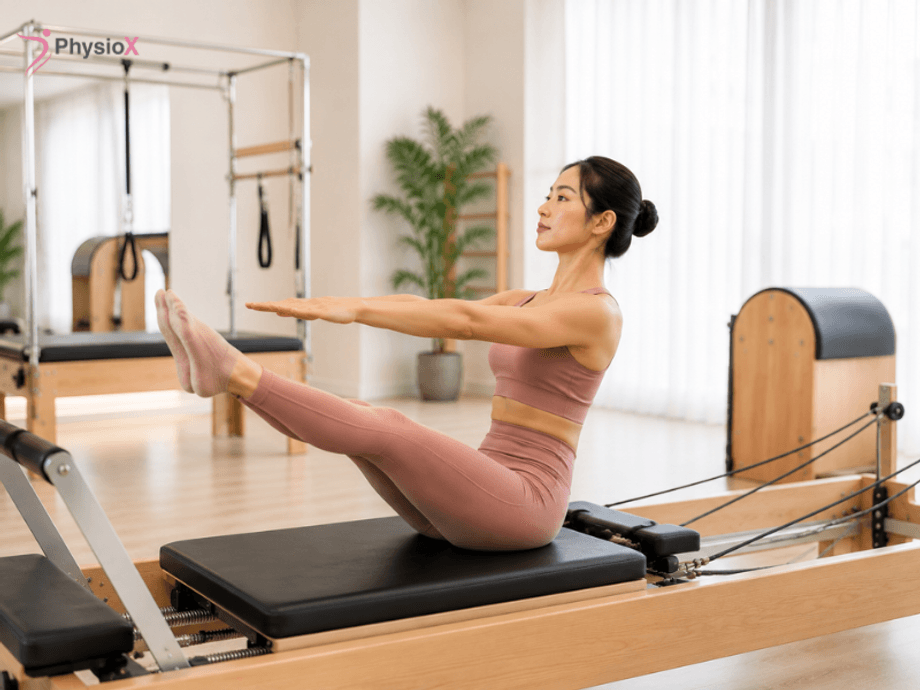
Starting your Pilates journey doesn't have to be intimidating. As you've seen throughout this guide, pilates for beginners is designed to help people of all ages and fitness levels build strength, improve posture, and move with greater confidence. Whether you choose Mat Pilates, Reformer Pilates, or a full apparatus programme, the most important step is finding an approach that matches your goals and supports your body safely.
Learning the Pilates basics under professional guidance can help you develop proper technique, reduce the risk of injury, and build a strong foundation for long-term progress. Remember, Pilates is not about being flexible or fit before you start—it's about improving gradually through consistent, controlled movement.
Ready to Start Your Pilates Journey?
At PhysioX, every beginner Pilates session is supervised by a licensed physiotherapist and tailored to your individual needs, ensuring a safe, supportive, and enjoyable experience from your very first class.
Book a beginner-friendly trial at PhysioX today.
To get started, connect with us on LINE, Facebook Messenger, or WhatsApp, or call us at +66 98 802 4861. Our team is here to answer your questions and help you take the first step towards moving better, feeling stronger, and enjoying the lifelong benefits of Pilates.
Related Blog